
AI Memory Hunger Forces Micron Consumer Exit
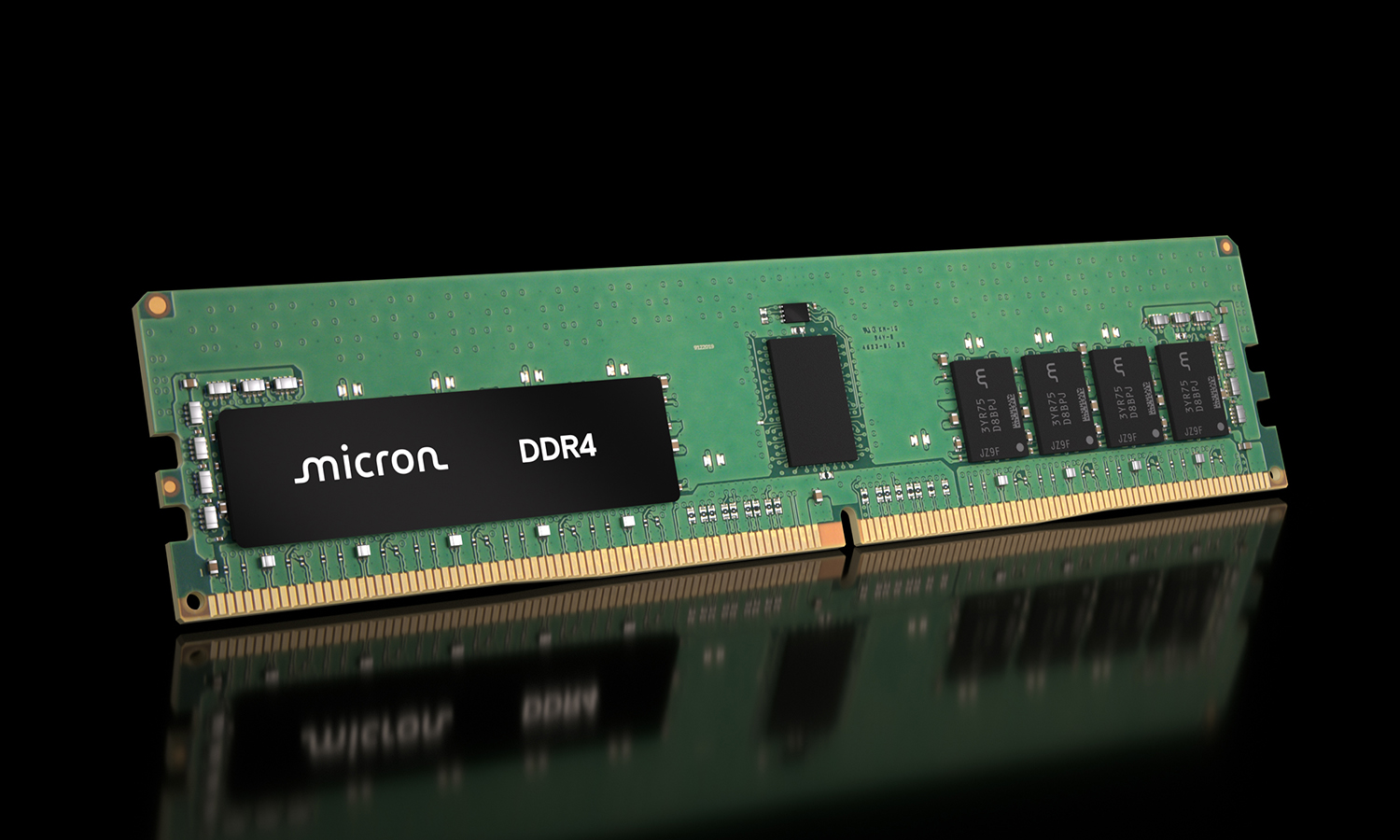


In the basement of a Boise, Idaho, dental office in 1978, four engineers founded what would become one of America’s semiconductor giants. Ward Parkinson, Joe Parkinson, Dennis Wilson, and Doug Pitman started Micron Technology as a modest design consultancy, backed by local investors including potato magnate J.R. Simplot.
By 1983, they had achieved a technological breakthrough – producing chips roughly half the size of Japan’s leading products. Nearly five decades later, that same company has made a decision that crystallises artificial intelligence’s profound impact on hardware economics: AI memory hunger is forcing manufacturers to abandon entire market segments.
On December 3, 2025, Micron announced it would completely exit the consumer memory market, discontinuing its 29-year-old Crucial brand by February 2026. “The AI-driven growth in the data centre has led to a surge in demand for memory and storage,” said Sumit Sadana, Micron’s executive vice president and chief business officer.
“Micron has made the difficult decision to exit the Crucial consumer business to improve supply and support for our larger, strategic customers in faster-growing segments.”
Translation: data centres running AI workloads will pay substantially more for memory than individual consumers ever could, and Micron’s fabrication capacity cannot serve both markets simultaneously.
The announcement represents both a business decision and a watershed moment revealing how AI memory hunger demands are restructuring global semiconductor supply chains, forcing manufacturers to make stark choices about which customers ‘deserve’ access to finite production capacity.
The economics driving AI memory hunger
Micron’s withdrawal reflects economic realities. As the world’s third-largest DRAM producer with an approximately 20% of global market share, the company sits between South Korean giants Samsung Electronics (43%) and SK Hynix (35%). Together, these three control roughly 95% of worldwide DRAM production – an oligopoly now facing unprecedented demand from AI infrastructure builders.
The margin differentials tell the story. Consumer RAM modules compete in volatile retail markets with razor-thin profitability. Enterprise contracts for high-bandwidth memory (HBM) used in AI accelerators and DDR5 modules for data centre servers deliver substantially higher average selling prices, multi-year commitments, and predictable demand.
For memory manufacturers, each fabrication wafer committed to consumer products represents foregone revenue from higher-value enterprise contracts – an opportunity cost that has become economically indefensible as AI demand accelerates.
The numbers illustrate the magnitude of the shift. Micron reported record fiscal 2025 revenue of US$37.38 billion, representing nearly 50% year-over-year growth driven primarily by data centre and AI applications, which accounted for 56% of total revenue. SK Hynix has reportedly sold out its entire 2026 production capacity for DRAM, HBM, and NAND products.
Consumer memory prices have surged accordingly. DRAM spot prices increased 172% year-over-year as of Q3 2025, with retail prices for 32GB DDR5 modules jumping 163-619% in global markets since September 2025. Component suppliers report paying US$13 for 16GB DDR5 chips that cost US$7 just six weeks earlier – increases sufficient to eliminate entire gross margins for third-party brands.
Consumer market restructuring amid AI memory hunger
Micron’s exit alters the consumer memory landscape. Third-party brands, including Corsair, G.Skill, Kingston, and ADATA source their DRAM chips from the major manufacturers. With Micron withdrawing entirely, these vendors must compete more aggressively for allocation from Samsung and SK Hynix – both simultaneously prioritising high-bandwidth memory production for AI accelerators.
The concentration creates vulnerabilities. Samsung and SK Hynix now comprise the only major suppliers serving both consumer and enterprise markets. Both face identical capacity allocation pressures. If AI infrastructure investment maintains current trajectories, additional manufacturers may reduce or restructure consumer operations.
Supply chain constraints are already materialising beyond DRAM. NAND flash wafer contract prices increased by over 60% in November 2025. Graphics memory markets face pressures as manufacturers shift to GDDR7 for next-generation GPUs, creating GDDR6 shortages that inflated prices by approximately 30%. Hard drive manufacturers increased prices 5-10%, citing limited supply.
For consumers and small businesses, the implications extend beyond pricing. Product availability may become increasingly constrained during peak demand periods. The reduction in direct supplier participation may compress product differentiation and limit competitive pricing dynamics that previously benefited buyers.
The broader industry realignment
Micron’s consumer exodus signals a structural transformation rather than a temporary reallocation. The AI infrastructure boom differs fundamentally from previous technology transitions. Personal computing, internet expansion, and mobile devices created sustained memory demand over decades with gradual capacity adjustments.
AI infrastructure deployment compresses that timeline dramatically – hyperscale operators are committing hundreds of billions in data centre construction over just a few years. Data centre semiconductor markets illustrate the scale. The total addressable market reached US$209 billion in 2024, and is projected to grow to nearly US$500 billion by 2030, driven primarily by AI and high-performance computing.
GPU revenue alone is forecast to expand from US$100 billion in 2024 to US$215 billion by 2030, with each GPU requiring substantial high-bandwidth memory allocation.
Memory architecture evolution compounds the challenge. AI training workloads increasingly require HBM3E modules, which offer superior bandwidth and power efficiency, while inference workloads demand DDR5 with tight latency specifications.
Automotive applications adopting zonal architectures require multi-gigabyte DRAM configurations. Each application commands premium pricing and long-term contracts – economic incentives systematically pulling manufacturing capacity away from consumer markets.
The manufacturing response reflects these priorities. Samsung is advancing 1c DRAM production and planning mass production of HBM4 in 2025 while phasing out DDR4 entirely. Micron began mass production of DRAM using Extreme Ultraviolet (EUV) lithography in 2025.
SK Hynix focuses development resources on HBM and advanced LPDDR solutions. All three manufacturers are directing research and capital investment toward applications offering superior returns.
What this means for enterprise buyers
Enterprise procurement teams face their own challenges as memory markets restructure. Memory represents 10-25% of bill-of-materials costs for typical servers and commercial PCs. Price increases of 20-30% in memory components translate to 5-10% increases in total system costs, compounding into millions in additional expenditure for organisations procuring at scale.
Strategic responses include forward purchasing agreements, establishing stronger direct relationships with manufacturers, and diversifying vendor partnerships. The timing uncertainty presents particular challenges. New fabrication capacity is under construction, supported by government incentives, but requires years to reach production readiness.
Critical questions ahead
Micron’s consumer market exit raises fundamental questions. Will Samsung and SK Hynix maintain consumer product lines, or will similar capacity pressures force comparable reductions? If consumer memory becomes primarily a third-party brand market sourcing chips from manufacturers prioritising enterprise customers, what happens to product innovation and competitive pricing?
The concentration among just two major manufacturers serving consumer markets creates potential vulnerabilities. Supply chain disruptions affecting either Samsung or SK Hynix would have an outsized impact on global consumer product availability.
Broader implications extend to technology accessibility. If memory pricing remains elevated or availability constrained for consumer products, the costs of personal computing and small business infrastructure increase accordingly, potentially widening digital divides.
Micron’s decision crystallises artificial intelligence’s role as a transformative force reshaping not just software, but the fundamental economics of hardware manufacturing. The Crucial brand’s retirement after 29 years marks the end of a time when memory manufacturers could serve both consumer and enterprise segments simultaneously and profitably.
For the broader technology ecosystem, hunger for AI memory has become the semiconductor industry’s dominant growth driver, commanding resources at levels that fundamentally alter which markets manufacturers choose to serve.
(Photo: Micron Technology)
Want to learn more about AI and big data from industry leaders? Check out AI & Big Data Expo taking place in Amsterdam, California, and London. The comprehensive event is part of TechEx and is co-located with other leading technology events including the Cyber Security Expo. Click here for more information.
AI News is powered by TechForge Media. Explore other upcoming enterprise technology events and webinars here.



